

Huawei
5,457,645 followers
June 30, 2026
Construction remains one of the world’s most fragmented industries. In Huawei Transform #25, experts examine how data, AI, digital twins, and shared standards can connect systems, improve efficiency, and create new value across the building lifecycle.
Published regularly throughout the year, Transform looks at how digital technology is reshaping the present, while giving readers a glimpse of the future.
Turning disconnected data into real-world results

Buildings generate vast amounts of data, but much of it goes unused. Dr. Cao Yong argues that data only creates value when systems can work together and insights can be translated into action.
Dr. Cao draws on his work with BuildingHarmony, a unified operating system developed by Huawei and industry partners to connect previously isolated building systems. His article explains how a unified digital foundation can simplify operations, improve energy management, and support more intelligent buildings. He also describes how one project in Qingdao reduced energy consumption by more than 15% after integrating fragmented systems and applying intelligent control.
Read the full Transform interview here: https://bit.ly/4eLHmHA
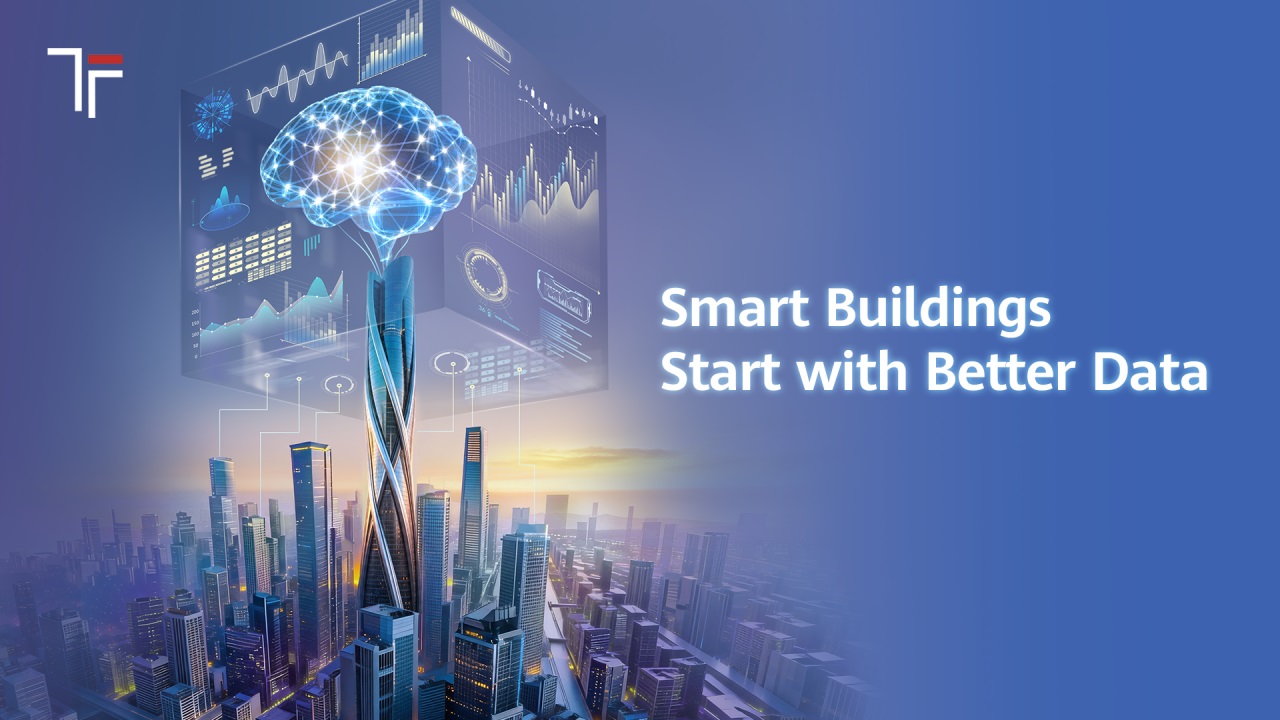
Smart buildings start with better data

The foundation of smart construction is not AI or automation. It is data.
Magdalena Pyszkowski argues that the building industry remains constrained by fragmented processes, inconsistent standards, and duplicated information. To unlock the full potential of digital technologies, she says the sector must focus on structured, accessible, and interoperable data that flows across the entire building lifecycle.
She also explains why collaboration, continuous learning, and open standards will be critical to the future of construction.
Read the full Transform interview here: https://bit.ly/3QIKOea
Building for extremes

The Qinghai-Tibet Plateau offers abundant solar energy, but also some of the most challenging conditions for building design anywhere in the world.
Professor Wang Dengjia explains how his team combined solar energy, thermal storage, digital twins, and AI to deliver near-zero-carbon buildings in an environment marked by extreme temperature swings and limited energy. His work offers a glimpse of how smart buildings can support sustainability, even in the harshest climates.
Read the full Transform interview here: https://bit.ly/4bdImmI
Fiber to the castle

Modern connectivity and historic architecture do not always go hand in hand.
At Château de la Vigne, a 15th-century French château, a new optical network delivers seamless Wi-Fi coverage while preserving the integrity of the historic structure. The project demonstrates how digital infrastructure can be integrated into heritage buildings without compromising their architectural character.
Read the full Transform case study here: https://bit.ly/4aqG8jG
Buildings without Babel fish

Construction generates enormous amounts of data, yet much of it remains trapped in incompatible formats and disconnected systems.
Professor Cornelius Preidel argues that the industry needs a common digital language. Without shared standards and interoperable data, information cannot move efficiently between stakeholders, limiting innovation and productivity.
For construction to become truly digital, he says, the sector must focus as much on data structure and governance as on technology itself.
Read the full Transform interview here: https://bit.ly/3SzFwSK
When factories go vertical

As cities run out of space, manufacturing is moving upward.
Shenzhen’s Baolong Industrial Park uses an “industrial up-stacking” model that places factories, offices, laboratories, and logistics facilities inside high-rise buildings.
But vertical density creates new operational challenges.
Using digital twins, intelligent scheduling, and AI-enabled management systems, the park has improved freight efficiency by more than 30%, showing how technology can transform vertical space into industrial productivity.
Read the full Transform case study here: https://bit.ly/4gM7R29
From cybersecurity to sustainability, from AI to infrastructure, Transform explores the technologies shaping business and society. Click here to browse the complete Transform archive.