


International Monetary Fund
1,019,793 followers
June 12, 2026
Dear readers,
In today’s edition, we highlight:
- Europe
- Robert Skidelsky
- Nationalization Returns
- FDI
Editor’s Note: Next week’s edition will arrive in your inbox on Thursday, as June 19 is a holiday in the U.S.
EUROPE
A Stronger Europe for Tougher Times

Europe must “toughen up” and use the war in the Middle East and disruptions to energy supplies as a spur to greater economic unity, IMF Managing Director Kristalina Georgieva said on Tuesday.
Europe is better prepared than just a few years ago to withstand the latest economic shock, but the continent is being left behind as the US and China race ahead, Georgieva told the One Europe, One Market Summit in Brussels.
“We see too much conflict between EU and national rules and priorities, too many barriers to intra-EU trade, and too much fragmentation in European energy and labor markets,” she said.
In 2010 Europe had the same nominal GDP as the United States, but now it is significantly lower. After two decades of weak productivity growth, European income per person is 70 percent of America’s, and the gap is widening.
Europe has achieved much already but must go further still, Georgieva said.
“Complete the single market, because the strength of your growth depends on it, and manage long-term spending pressures, including in defense, because resilience depends on it.”
F&D MAGAZINE
Keynes for Our Times

Robert Skidelsky, who died in April aged 86, was one of the giants of economic history. His three-volume biography of John Maynard Keynes, written over some 20 years, made him the world’s leading authority on the father of macroeconomics.
In an article for Finance & Development magazine submitted shortly before his death, Skidelsky describes how Keynes’s moral philosophy can guide economics, finance, and AI-driven markets today. Keynes understood that the future is essentially unknowable and that it is better to be vaguely right than precisely wrong, Skidelsky writes.
“This insight remade economics in the 20th century, and it is but one of his ideas that are even more relevant in our own extremely uncertain times.
STATE OWNED ENTERPRISES
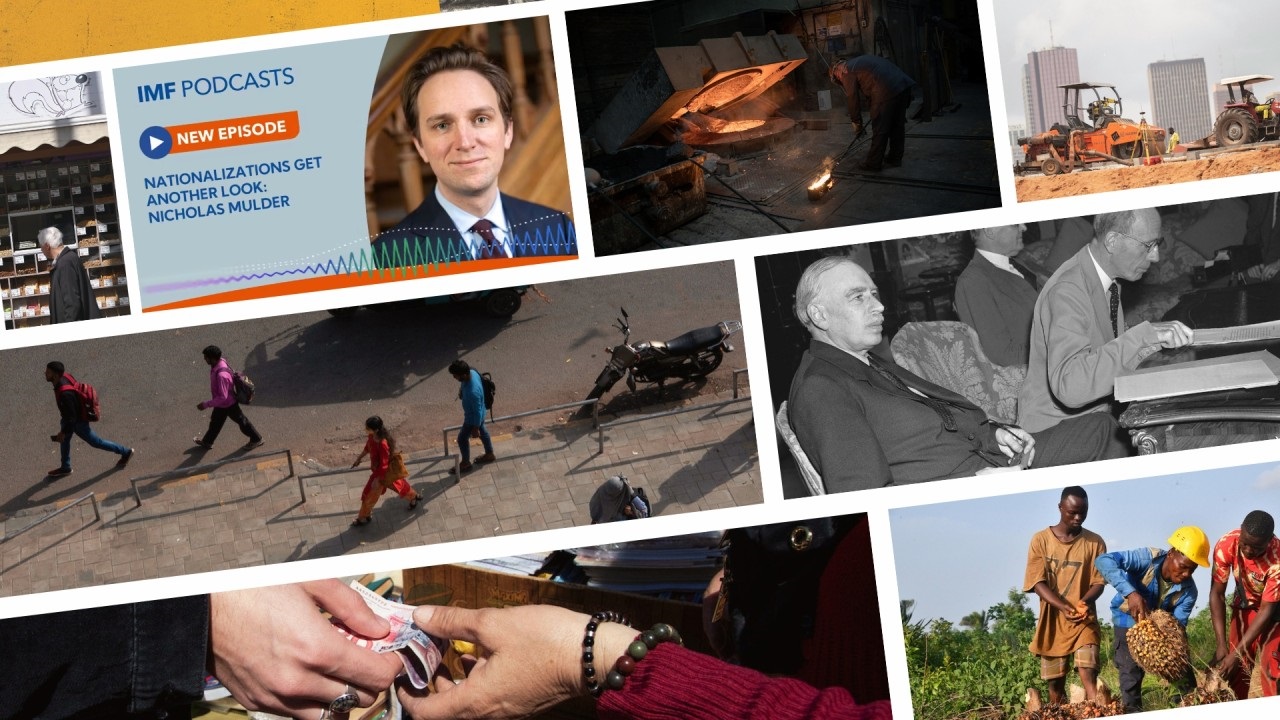
Nationalization Returns

Economists have long viewed state-owned enterprises as a generally bad idea. But is handing over key resources and industries to the private sector really the answer?
Economic historian Nicholas Mulder says, with all the geopolitical risks in the world of late, governments are looking for ways to keep essential resources under their control. In this podcast, Rhoda Metcalfe and Nicholas Mulder discuss the potential and risks of rising government ownership.
Mulder is a professor of history at Cornell University. His article The New Wave of Nationalization is published in the June issue of Finance & Development magazine.
FDI
Fiscal Institutions Drive FDI in Low-Income Countries

Low-income countries capture less than 1 percent of global foreign direct investment and most of it flows into mining and other low-innovation sectors.
New IMF analysis shows that countries with stronger fiscal institutions, especially tax administration and public financial management, attract more and more high quality foreign direct investment. The quality of investment matters because more technology-intensive FDI is more likely to attract new technologies, create skilled jobs, and raise people’s income over time.
This is especially true when economic and political uncertainty are high, as investors place greater weight on how a government manages its budget and the quality of a country’s institutions.
The research also suggests that policies such as tax incentives and special economic zones work in countries where the government’s fiscal discipline and institutional capacity are already strong.
Thank you very much for your interest in the Weekend Read! Be sure to let us know what issues and trends we should have on our radar.