

TED Conferences
24,517,826 followers
March 20, 2026
Have you recently found it harder to articulate what you mean, what you feel, what truly matters?
It’s a strange paradox. We’re surrounded by more technology, more information, more tools than ever before and yet the most essential human skill — clear, meaningful communication — still feels just out of reach for most of us.
In this edition of Spark, we turn to someone who has spent years studying what makes ideas resonate with people around the world.
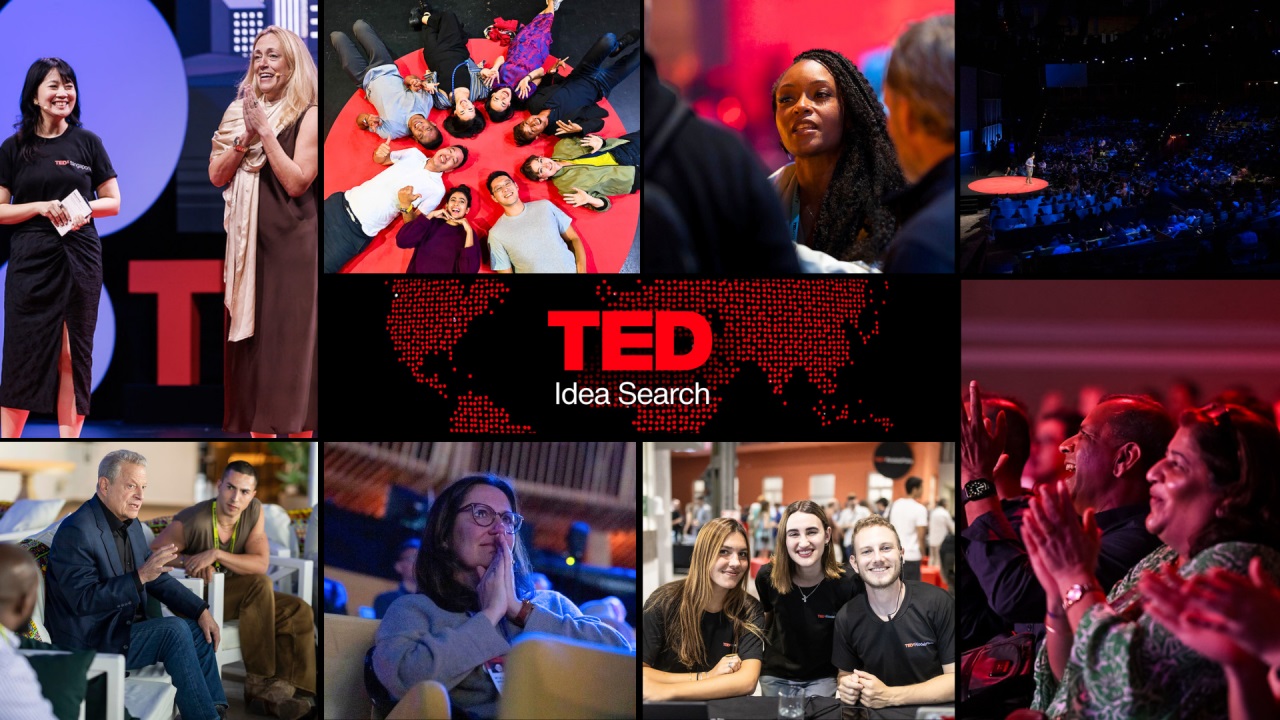
Kelly Stoetzel, a longtime TED curator, recently led our Global Idea Search, traveling across nine countries to uncover the most compelling communicators of this moment. She discovered what they’re getting right, including:
- What makes an idea cut through?
- What makes people actually listen?
- What makes an idea stick?
We asked her to share what she learned. Kelly, over to you:
Hi, I’m Kelly and I’m here to tell you that whether you’re crafting an email, presenting to a room that won’t look up from their laptops, or stepping onto a global stage — the same principles of communication apply.
Here are 5 tips from our Ideas Search speakers that you can use to make your ideas impossible to ignore:
1. Say Less.
The best communicators know what not to say. You must edit ruthlessly. Clarity comes from the choices you make about what to leave out. If you want your message to resonate, tie it directly, and only, to a single core idea.
This is not easy. The instinct might be to include everything, especially when you care deeply about your subject. All the context, all the caveats, all the supporting evidence and stories. But when conducting the idea search, the speakers who moved us the most had done the hard work of deciding what their talk was really about, and then had the discipline to say only that.
A finalist at TEDxSingapore told us she cut the stories she loved most because they belonged to a different talk. What remained was lean, focused, and unforgettable.

2. Specificity is magnetic.
Want a moment to stick? Be concrete. Tie it to a particular image, experiment, sound or memory. Those details give the audience something to hold onto while the idea unfolds.
A speaker at TEDxLagos opened with a description of studying by candlelight to set up his idea about maintaining energy systems. A speaker in Amman shared a video of her father sharing some meaningful advice, and a speaker in London sang a captivating song. Each of these openings connect with a specific sense or memory to ground the audience in their idea.
3. Let curiosity do the work.
Allow a small question or mystery to linger for a moment rather than resolving it immediately. Your listeners will lean into that pause to see how things unfold.
In Buenos Aires, one memorable speaker kept us on the edge of our seats with humor and delight and a little mystery right through to the end. We just couldn’t wait to see where she was taking us.
We’re not going to tell you how it ended. You’re going to have to watch the series to find out.
4. Novelty isn’t enough. You need relevance.
When reviewing the thousands of pitches in the Ideas Search, one thing was clear: while many were genuinely original, not enough of them answered the listener’s silent question: Why should I care about this? Start with why you care. That will help your audience connect with you — and your idea. If you can convince listeners of why it should matter to them, too, then you know your idea has landed with impact.
A speaker at TEDxChicago shared how he learned as a journalist to have healthy conversations with people he disagrees with. Not a new topic, but he brought his unique perspective as a journalist to the talk, and made a strong case to the audience for why it’s important to build connections across differences now more than ever. That uniqueness combined with the relevance of the subject matter took his talk to the next level.
5. You need a destination.
Before you communicate, ask yourself: where do I want my audience to go? What should they think, feel or do differently by the end? If you can answer that question clearly, your talk has a purpose that will carry long after you leave the stage.
The talks that stayed with us longest didn’t just teach us something, they left us somewhere new.
At TEDxSydney, a finalist closed her talk not with a summary of her presentation, but with a single, direct ask — something her audience could actually do. The room was still. It landed because everything before it had been building toward that moment.
Ready to see this in action? Watch it all unfold in Vancouver.
Every one of these lessons — the ruthless editing, the specific details, the well-placed mystery, the relevance needed and the final destination — is about to play out live at TED2026 on April 13-17.
You’ll witness these nine Global Idea Search speakers, selected from thousands, stand up in front of a room of the most curious, brilliant and impressive people and deliver their unique ideas. Alongside them will be Malala Yousafzai, Keke Palmer, Jonathan Haidt, Julia Sweeney, Tekedra N. Mawakana, Drew McCartor, Randall Lane, Leopoldo López, Mark Rober and 80+ other speakers getting ready to deliver the talk of their lives.